Why Balance Training Changed My Daily Routine (And Can Change Yours)
You don’t need intense workouts to feel stronger and more stable every day. For years, I ignored balance training—until a minor stumble made me realize how much I’d overlooked. Turns out, improving balance isn’t just for athletes or older adults. It’s a quiet game-changer for posture, coordination, and everyday movement. Simple, science-backed exercises can make daily tasks easier and help protect your body over time. This is how I made body maintenance a natural part of life—without gym pressure or complicated routines.
The Overlooked Secret of Daily Stability
Balanced movement is something most people take for granted—until it’s compromised. In typical fitness plans, strength and cardiovascular endurance dominate, while balance is quietly left behind. Yet, stability plays a crucial role in how we move through the world. It affects everything from climbing stairs to carrying groceries, standing in line, or stepping off a curb. Without adequate balance, even simple actions carry a higher risk of missteps or falls. The truth is, balance is not just an innate ability; it’s a skill that can be strengthened with practice, much like building muscle or improving flexibility.
Many dismiss balance training as something only relevant for older adults or professional athletes. But instability can show up at any age. A brief loss of footing on a slippery surface, a wobble while reaching for a high shelf, or feeling unsteady after standing up too quickly—these are subtle signs that the body’s balance system may need attention. These moments are not just minor inconveniences; they’re early warnings. When balance is neglected, the body compensates in ways that strain joints, misalign posture, and increase vulnerability to injury. Over time, poor stability can lead to chronic discomfort, especially in the knees, hips, and lower back.
What makes balance so powerful is its connection to functional movement—the kind of motion we rely on every single day. Unlike isolated gym exercises, balance training integrates multiple systems in the body to support real-life activities. It enhances coordination, sharpens awareness of body position, and improves reaction time. The good news is that even small efforts, when done consistently, can yield noticeable improvements. You don’t need special equipment or hours of training. You just need to start paying attention to how you move—and make subtle adjustments that build resilience over time.
Why Balance Training Is Essential for Long-Term Body Care
Balanced movement depends on a complex network of systems working together: the vestibular system in the inner ear, sensory feedback from muscles and joints (known as proprioception), and muscular coordination. The vestibular system detects motion and spatial orientation, helping you maintain equilibrium whether you’re standing still or walking. Proprioception allows your body to sense where your limbs are without looking—like knowing your foot is on the ground even with your eyes closed. These systems send constant signals to the brain, which then directs muscles to make micro-adjustments that keep you upright and steady.
When these systems are underused, they weaken. Just like muscles atrophy from lack of use, balance pathways in the brain can become less responsive over time, especially with a sedentary lifestyle. This decline often begins earlier than people realize—sometimes in midlife—and accelerates if not addressed. The consequences go beyond occasional wobbling. Poor balance increases the risk of falls, which can lead to fractures, joint injuries, and loss of independence. But the benefits of training go far beyond fall prevention. Improved balance enhances overall body awareness, which helps you move with greater confidence and control.
Think of your body as a finely tuned machine. If the sensors that monitor position and motion aren’t calibrated regularly, the entire system runs less efficiently. Balance training keeps those sensors sharp. It strengthens the communication between your brain and muscles, making movements smoother and more precise. This has a ripple effect: better posture, reduced strain on joints, and even improved focus during physical tasks. Research shows that individuals who engage in regular balance exercises report less fatigue during daily activities and greater ease in performing household chores, walking, and standing for extended periods.
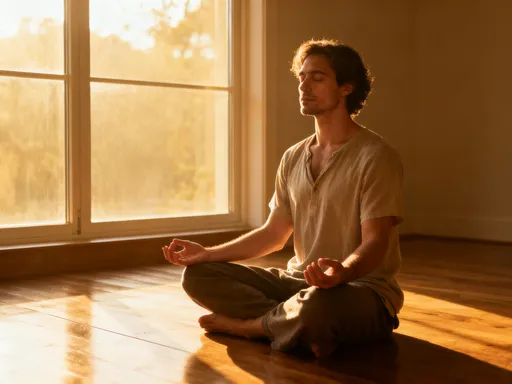
Another often-overlooked benefit is the mind-body connection fostered by balance practice. Because staying steady requires concentration and presence, these exercises naturally encourage mindfulness. You become more aware of your breathing, your alignment, and the subtle shifts in weight that keep you upright. This heightened awareness doesn’t just improve physical stability—it also promotes a sense of calm and groundedness. In a world full of distractions, taking a few moments each day to focus on balance can be a form of quiet self-care that supports both physical and mental well-being.
My Simple Start: No Equipment, No Gym, Just Real Life
The shift began with a small incident—one that could have easily been brushed off, but instead became a wake-up call. I was walking down a familiar staircase at home when my foot caught the edge of a step. I didn’t fall, but the sudden lurch and the seconds I spent regaining my footing startled me. In that moment, I realized I had been taking my stability for granted. I was active, walked regularly, and felt generally healthy, yet my body wasn’t as reliable as I assumed. That experience prompted me to explore balance training, not as a fitness trend, but as a form of everyday body maintenance.
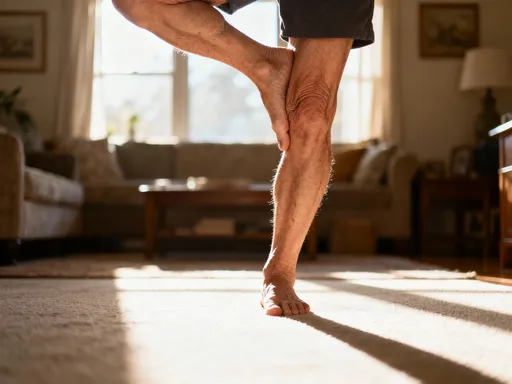
I started with the simplest exercises I could fit into my routine—ones that required no special gear or extra time. The first was standing on one leg while brushing my teeth. At first, I could barely hold the position for 10 seconds without grabbing the sink. My ankle wobbled, my hips shifted, and I felt surprisingly unsteady. But instead of seeing this as a failure, I viewed it as feedback. Each attempt taught me something about my body’s current state. Over time, I noticed I could stand longer, with less sway, and without needing support. The progress was slow, but it was real.
Another early practice was the heel-to-toe walk—walking in a straight line with the heel of one foot touching the toes of the other. I did this along the hallway floor, using the baseboard as a guide. It felt awkward at first, like I was walking a tightrope, but it quickly revealed how much I relied on wide, unthinking steps to stay upright. Doing this daily, even for just a minute, improved my coordination and foot placement. I began to walk with more intention, noticing how my weight transferred from heel to toe with each step.
The real breakthrough was realizing that consistency mattered more than intensity. I wasn’t trying to master advanced poses or train for a competition. My goal was simply to build awareness and resilience into my daily life. By linking balance exercises to existing habits—like brushing my teeth, waiting for the kettle to boil, or standing during TV commercials—I removed the barrier of having to “find time.” These micro-movements added up, creating a foundation of stability that began to show in everyday moments: walking on uneven sidewalks, stepping off a bus smoothly, or reaching into a high cabinet without losing my balance.
Everyday Exercises That Actually Work (And Take 5 Minutes)
One of the most effective and accessible balance exercises is the single-leg stance. To do this, stand near a wall or sturdy surface for support if needed. Lift one foot slightly off the ground, keeping your knee bent, and balance on the other leg. Focus on keeping your hips level and your standing knee slightly soft, not locked. Imagine a string gently pulling the top of your head upward, aligning your spine. Hold for 20 to 30 seconds, then switch sides. This exercise strengthens the ankle, knee, and hip stabilizers while improving proprioception. Over time, you may find you can do it with less support—or even with your eyes closed for an added challenge.
Another useful routine is the tandem stance, where you stand with one foot directly in front of the other, heel to toe, as if on a straight line. This narrows your base of support, making it harder to maintain balance and thus more effective for training. Keep your arms at your sides or slightly out for balance, and engage your core muscles to stay steady. Hold for 20–30 seconds, then switch foot positions. This exercise mimics the alignment needed during walking and helps improve coordination between your lower body and nervous system.
The sit-to-stand movement is both a strength and balance exercise. Sit in a sturdy chair with your feet flat on the floor. Cross your arms over your chest and slowly stand up without using your hands for support. Lower yourself back down with control. This movement builds leg strength and teaches your body to shift weight smoothly from sitting to standing—a motion used frequently in daily life. Performing five to ten repetitions can improve both balance and functional mobility.
Slow weight shifts are another low-effort, high-impact practice. Stand with your feet shoulder-width apart and slowly shift your weight to one side, lifting the opposite foot slightly off the ground. Hold for a few seconds, then shift to the other side. This helps train your body to adjust to weight changes, which is essential when stepping over obstacles or navigating crowded spaces. You can also practice shifting forward and backward, rolling your weight from toes to heels, to enhance front-to-back stability.
These exercises can easily be woven into daily life. Try the single-leg stance while waiting for your morning coffee. Do tandem stance during commercial breaks. Practice sit-to-stands after sitting for a long period. The key is repetition without strain. These movements don’t require perfect form to be beneficial—just mindful effort. Over time, your body learns to stabilize more efficiently, making everyday motion smoother and safer.
How Small Shifts Add Up: Noticeable Changes Without Obsession
The improvements from regular balance training are often subtle at first, but they accumulate in meaningful ways. One of the earliest changes I noticed was in my walking. My steps became more even, my posture straighter, and my movements more fluid. I no longer shuffled or hesitated when stepping onto curbs or uneven ground. Carrying laundry baskets or grocery bags felt less taxing because my body was better at adjusting to the shifting weight. Even standing in one place—like waiting in line or chopping vegetables—felt more comfortable, with less fatigue in my legs and feet.
Physically, my joints felt less strained. Better balance meant my body was distributing weight more evenly, reducing unnecessary pressure on my knees and hips. I also became more aware of my alignment. I caught myself slouching less and corrected my posture instinctively. These small adjustments reduced stiffness and discomfort, especially after long days of sitting or standing. Over time, I experienced fewer aches, particularly in my lower back, because my core and stabilizing muscles were working more effectively to support my spine.
Mentally, the shift was just as significant. I began to move with greater confidence. Where I once felt tentative on slippery floors or crowded sidewalks, I now felt grounded and in control. This wasn’t about becoming fearless—it was about trusting my body more. That trust translated into a quieter mind during physical tasks. I wasn’t constantly worried about losing my balance or misstepping. Instead, I could focus on the task at hand, whether it was gardening, playing with grandchildren, or walking through a busy store.
The most valuable lesson was that consistency, not intensity, drives long-term results. I didn’t need to do complex routines or train for hours. Five minutes a day, done regularly, was enough to create lasting change. Progress wasn’t measured in numbers or reps, but in how I felt during daily life. I wasn’t chasing perfection; I was building resilience. And that shift in mindset—from performance to maintenance—made all the difference in staying committed.
Beyond Standing Still: Making Balance Part of Movement
While static balance exercises are a great starting point, true stability is tested in motion. Dynamic balance—maintaining control while moving—is what protects you in real-world situations. Walking with purpose, stepping over thresholds, turning quickly, or navigating uneven terrain all require the body to adjust in real time. That’s why it’s important to move beyond standing still and incorporate balance into everyday movement.
One simple way to do this is to walk with intention. Instead of rushing, focus on lifting your knees slightly, landing heel to toe, and keeping your posture tall. Try walking along a straight line on the sidewalk or floor, or practice stepping over small objects like books or pillows. These challenges train your body to coordinate movement while maintaining stability. Even gardening—bending, reaching, and stepping around plants—can become a dynamic balance workout when done with awareness.
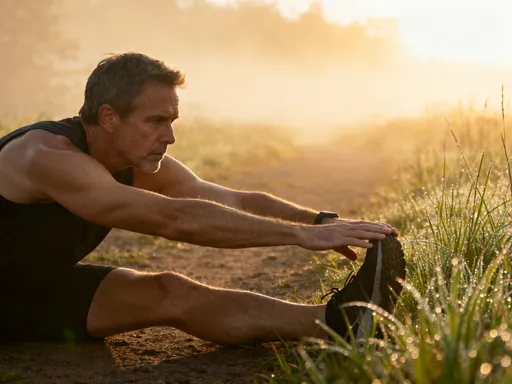
Another effective practice is to introduce slight variations in your environment. Walk on slightly uneven ground, like a grassy path or gravel walkway, to engage stabilizing muscles in new ways. You can also close your eyes briefly while standing still (only if safe and supported) to challenge your proprioception. These low-risk challenges keep your balance system active and adaptable. Climbing stairs mindfully—feeling each step, using your leg muscles fully—also strengthens dynamic stability.
The goal isn’t to make every movement a workout, but to bring awareness to how you move. When balance becomes part of your natural motion, it enhances agility, coordination, and safety. Over time, these small efforts build a body that responds quickly and efficiently to changes in terrain or movement, reducing the risk of missteps and falls. And because these practices are embedded in daily life, they’re sustainable—no extra time or effort required.
Building a Sustainable Habit: The Mindset Shift That Stuck
What made balance training stick wasn’t motivation or willpower—it was a shift in perspective. I stopped seeing it as exercise and started viewing it as self-care. Just as I brush my teeth to maintain oral health, I practice balance to maintain my body’s stability. This simple reframing removed the pressure to perform or achieve results quickly. Instead, it became a daily act of care, like drinking water or getting enough rest.
Pairing balance exercises with existing habits made them effortless to maintain. I linked single-leg stands to brushing my teeth, heel-to-toe walks to moving through the house, and sit-to-stands to getting up from my chair. These tiny integrations required no planning and fit naturally into my day. I also learned to appreciate small signs of progress—a longer hold, less wobble, smoother transitions—without needing dramatic changes to feel successful.
Patience was key. Balance doesn’t improve overnight. Some days felt no different than the last. But over weeks and months, the cumulative effect became undeniable. My body felt more reliable, my movements more confident, and my daily life easier. I no longer feared losing my footing; instead, I trusted my body’s ability to adapt and respond.
In the end, balance training became more than a physical practice—it became a quiet foundation for lifelong mobility and independence. It’s not about achieving perfection or mastering difficult poses. It’s about showing up for your body every day in small, meaningful ways. And for anyone looking to feel stronger, steadier, and more in control, it’s one of the simplest, most powerful steps you can take.