How I Stopped Chasing Returns and Started Winning with Fund Investing
What if the secret to growing your money isn’t about picking the next hot stock, but staying consistent with something simple? I used to overthink investing—jumping on trends, missing timing, and barely breaking even. Then I tried fund dollar-cost averaging. No hype, no stress. Just steady progress. In this article, I’ll walk you through how this method quietly transformed my finances, the traps I fell into early on, and the practical tricks that actually work. It’s not flashy, but it’s real—and it might be exactly what you need.
The Moment I Realized My Investing Was Broken
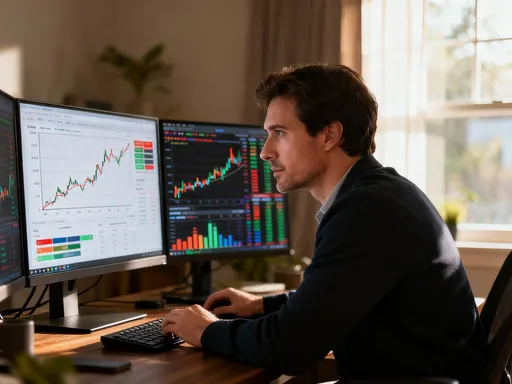
For years, I believed that successful investing meant making bold moves at the right time. I watched financial news obsessively, waiting for signals. I bought into technology stocks when everyone was talking about them, sold out of fear during market dips, and reinvested when optimism returned—only to miss the early rebound. My portfolio looked like a rollercoaster with no net gain. After nearly a decade, my returns barely matched inflation. That was my wake-up call: I wasn’t investing; I was reacting. Emotional decision-making had turned what should have been long-term growth into a cycle of stress and stagnation.
What I didn’t understand then was that markets are designed to reward patience, not prediction. Studies have shown that individual investors often underperform the very funds they own simply because they buy high and sell low—driven by fear and excitement rather than strategy. The S&P 500 has delivered an average annual return of about 10% over the long term, yet the average investor earns far less due to poor timing. I was part of that statistic. My attempts to outsmart the market were actually costing me money. The turning point came when I shifted focus from chasing performance to building discipline.
This realization didn’t come from a financial guru or a viral video. It came from reading a simple chart showing how $500 invested monthly in a broad-market index fund over 20 years could grow—even through recessions, crashes, and uncertainty. The line wasn’t perfectly smooth, but it trended upward. That consistency, not perfection, was the key. I began to see that investing wasn’t about being right all the time; it was about being consistent. That shift in mindset led me to explore a more structured approach: fund-based dollar-cost averaging.
What Fund Dollar-Cost Averaging Really Means (And Why It’s Not Boring)
Dollar-cost averaging is often dismissed as too conservative or unexciting. But its power lies in its simplicity and reliability. At its core, it means investing a fixed amount of money into a fund at regular intervals—say, $300 every month—regardless of market conditions. When prices are low, your money buys more shares. When prices are high, it buys fewer. Over time, this smooths out the average cost per share and reduces the risk of investing a large sum at a market peak.
To understand how effective this can be, consider a hypothetical example. Suppose two investors each have $12,000 to invest. One puts it all in at once (lump-sum investing), while the other invests $1,000 per month for a year. If the market drops sharply in the first few months, the dollar-cost averager benefits by purchasing more shares at lower prices. Even though lump-sum investing has historically delivered slightly higher average returns over time, it comes with significantly more risk—especially for those who panic and sell during downturns. For most people, particularly those investing over decades, the emotional stability of dollar-cost averaging outweighs the marginal gains of timing.
What makes this strategy powerful isn’t speed—it’s resilience. By removing the need to predict the market, it eliminates one of the biggest sources of investor error. You don’t have to know whether the economy will grow or shrink next quarter. You just need to stay consistent. This approach also encourages good habits: treating investing like a regular expense, much like paying a utility bill. Over time, the compounding effect turns small, routine contributions into substantial wealth. The magic isn’t in the method itself, but in the behavior it supports—steady, emotion-free participation in the market.
How to Pick the Right Funds Without Getting Overwhelmed
When I first started looking into funds, I was overwhelmed by choices. There were hundreds of options—sector-specific funds, international funds, actively managed portfolios, and more. I made the mistake of chasing funds with the highest recent returns, only to watch them underperform the following year. I learned the hard way that past performance is not a reliable predictor of future results. What I needed wasn’t the shiniest option, but a solid, dependable foundation.
The key characteristics I now look for in a fund are low expense ratios, broad diversification, and long-term consistency. Expense ratios matter because even a 1% fee can eat away at thousands of dollars in gains over time. A fund with a 0.05% expense ratio will cost you $5 per year for every $10,000 invested, while one at 1% costs $100. Over 30 years, that difference compounds dramatically. Broad diversification—such as a total stock market or global index fund—spreads risk across thousands of companies, reducing the impact of any single failure.
I also pay attention to how a fund behaves during downturns. A strong fund doesn’t promise to avoid losses—that’s impossible—but it should recover over time in line with the broader market. I avoid funds that make aggressive claims or focus on narrow themes, like artificial intelligence or cryptocurrency, unless they make up only a small portion of a well-balanced portfolio. Instead, I prioritize funds that track established market indexes, which have a proven track record of long-term growth. You don’t need to be a financial expert to choose wisely; you just need to focus on simplicity, transparency, and sustainability.
Setting Up Your System So You Don’t Quit Midway
Knowledge is only half the battle. The real challenge is sticking with your plan when markets turn volatile. I nearly gave up twice—once during a sharp correction when my account balance dropped by 15%, and again when a friend boasted about doubling his money in a speculative stock. In both moments, emotion threatened to override discipline. What saved me was not willpower, but structure. I had set up automatic transfers from my checking account to my investment fund every payday. Because the process was automated, I didn’t have to decide each month whether to invest. The decision had already been made.
Automation is one of the most powerful tools available to individual investors. It removes the temptation to time the market or pause during uncertainty. Just as you wouldn’t skip a mortgage payment because home values dipped, you shouldn’t stop investing because stock prices fell. In fact, downturns are when dollar-cost averaging works best—your fixed contributions buy more shares at lower prices, setting you up for stronger gains when the market recovers.
Another crucial part of my system is goal tracking. I keep a simple spreadsheet that shows my monthly contributions, account balance, and total growth over time. I don’t check it daily—once a quarter is enough. Seeing the long-term trend helps me stay focused, even when short-term fluctuations are unsettling. I also set clear, meaningful goals: retirement, a future home, education for my children. These aren’t abstract numbers—they represent real life aspirations. When doubt creeps in, I remind myself who I’m investing for and why. Structure, not motivation, is what keeps me on track.
When to Adjust—And When to Stay the Course
Life is not static, and neither should your financial plan be. But there’s a critical difference between thoughtful adjustments and impulsive reactions. I’ve learned to distinguish between noise—short-term market swings, media headlines, social media hype—and meaningful changes, such as shifts in income, family needs, or long-term goals. Reacting to noise leads to poor timing. Responding to real-life changes with intention leads to sustainable progress.
One practice that has helped me stay balanced is annual portfolio rebalancing. Over time, some investments grow faster than others, causing your original asset allocation to drift. For example, if stocks perform well, they might grow from 70% of your portfolio to 85%, increasing your risk exposure. Once a year, I review my holdings and realign them to my target mix—say, 70% stocks and 30% bonds. This forces me to sell high and buy low, which supports long-term returns without requiring constant monitoring.
I also reassess my investment amount when major life events occur. When I received a raise, I increased my monthly contribution. When my child was born, I opened a dedicated education fund and set up a separate automated investment. These aren’t emotional decisions—they’re planned responses to changing circumstances. I avoid making changes based on market conditions alone. If the stock market drops, I don’t reduce my investment; I continue as usual. If it surges, I don’t pour in extra money out of excitement. Discipline means staying the course, but wisdom means adjusting when your life, not the market, demands it.
Common Mistakes That Sabotage Long-Term Gains
Even with a solid plan, it’s easy to fall into traps that quietly erode returns. I’ve made nearly all of them. The most damaging was stopping my investments during a market downturn. After seeing my balance shrink, I paused contributions for six months—exactly when I should have kept going. That decision cost me missed opportunities to buy low and delayed my long-term growth. Another mistake was chasing funds with strong past performance, assuming they would continue to lead. In reality, many top-performing funds in one year rank near the bottom the next.
I also underestimated the impact of fees. Early on, I didn’t pay attention to expense ratios or transaction costs. I thought they were too small to matter. But over decades, even a 0.5% difference in fees can reduce your final balance by tens of thousands of dollars. I now prioritize low-cost index funds and avoid unnecessary trading, which can trigger taxes and commissions. Another subtle trap is over-diversification—owning so many funds that it becomes hard to track performance or understand risk. Simplicity is strength. A well-chosen mix of two or three core funds is often more effective than a dozen overlapping ones.
Perhaps the most common mistake is inaction—putting off investing because you don’t have enough money, don’t feel ready, or are waiting for the “right time.” The truth is, there is no perfect moment. Every month you delay means missed compounding. Starting with $100 a month is better than waiting to invest $500 later. Awareness of these pitfalls won’t eliminate mistakes, but it makes them easier to recognize and correct. The goal isn’t perfection—it’s progress.
Building a Smarter Financial Future—One Step at a Time
Looking back, the most significant change in my financial life wasn’t a single decision—it was a series of small, consistent actions. I didn’t get rich overnight. I didn’t beat the market. But I stopped losing to it. By investing regularly in low-cost, diversified funds, I aligned myself with long-term economic growth instead of fighting against market volatility. The results weren’t dramatic at first, but over time, compounding turned modest contributions into meaningful wealth. More importantly, my relationship with money changed. I no longer feel anxious about market swings. I don’t obsess over daily balances. I trust the process.
This approach fits naturally into a balanced financial life. It works whether you’re saving for retirement, a home, or your children’s future. It doesn’t require constant attention or expert knowledge. It just requires commitment. Fund dollar-cost averaging is not a shortcut, but it is a proven path. It won’t guarantee wealth, but it builds confidence, reduces stress, and increases the odds of success. For anyone who has ever felt overwhelmed by investing, confused by choices, or discouraged by past losses, this method offers a way forward.
The final lesson I’ve learned is this: financial success is less about intelligence and more about behavior. It’s not about making perfect decisions every time. It’s about making good ones consistently. You don’t need to chase returns. You just need to show up, invest steadily, and let time do the rest. In a world full of noise and distraction, sometimes the simplest strategy is the most powerful. If you’re ready to stop reacting and start building, the first step is already within your reach.